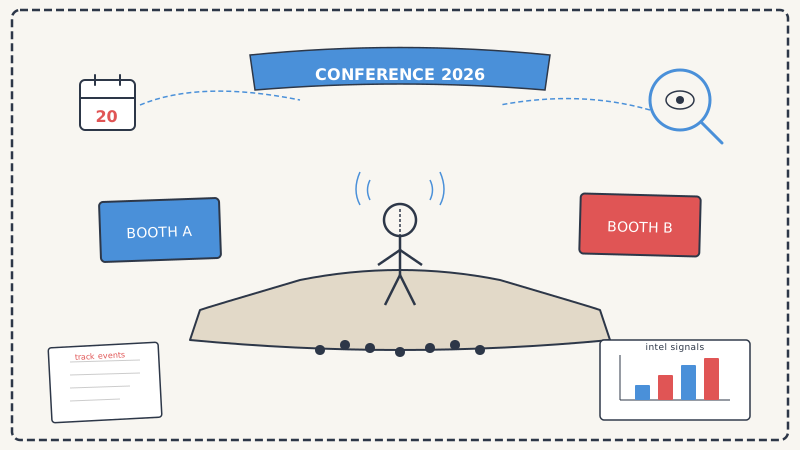
Every time a competitor sponsors an industry event, books a booth at a trade show, or puts a VP on stage at a conference, they are telling you something specific about their strategy. They are showing you which buyer personas they want to reach, which verticals they are prioritizing, and how much budget they are willing to invest to win those segments.
Most sales teams ignore this intelligence entirely. They might notice when a competitor shows up at the same conference, but they treat it as a coincidence rather than a data point. That is a missed opportunity. Competitor event activity is one of the most visible and most under-leveraged signals in competitive intelligence.
This guide breaks down how to build a systematic approach to tracking competitor event presence and turning it into actionable sales intelligence that improves deal outcomes.
Why Competitor Event Activity Matters for Sales Teams
Conference sponsorships are expensive. A mid-tier booth at a major SaaS conference can cost $15,000 to $40,000. A platinum sponsorship with a keynote slot can run $100,000 or more. Companies do not spend that money casually. Each sponsorship decision reflects a deliberate strategic choice about which audience to reach and which message to deliver.
That makes event sponsorships a reliable proxy for strategic intent. Unlike press releases or blog posts that can be produced cheaply, event sponsorships require real budget allocation and leadership approval. When a competitor commits to sponsoring a healthcare IT conference for the first time, that is a stronger signal of vertical expansion than a blog post titled “Our Healthcare Solution.”
For sales teams, competitor event intelligence is valuable across three dimensions:
Market prioritization signals. Which conferences a competitor sponsors tells you which buyer segments they are targeting. If a competitor that traditionally focuses on mid-market SaaS suddenly starts appearing at enterprise procurement and supply chain conferences, they are making a move upmarket or into a new vertical. That is data your team can act on.
Messaging and positioning intelligence. Conference presentations, booth messaging, and sponsored session topics reveal how competitors are positioning themselves. Are they leading with a new feature? Rebranding around a different value proposition? Targeting a pain point you have not addressed in your own messaging? This intelligence feeds directly into battlecard updates and talk track refinements.
Account-level targeting opportunities. Conferences generate attendee lists, speaker rosters, and social media conversations that reveal which specific accounts your competitors are engaging. If a competitor’s VP of Sales is photographed with the CTO of one of your target accounts at an industry dinner, that is a relationship signal your AE needs to know about immediately.
The Five Types of Competitor Event Signals
Not all event activity carries the same intelligence value. Here are the five categories of competitor event presence worth tracking, ranked by signal strength.
1. Platinum and Title Sponsorships
When a competitor takes on a platinum, title, or presenting sponsorship at a major industry event, it is among the strongest public signals of strategic commitment. These sponsorships typically include keynote speaking slots, prominent booth placement, and heavy branding throughout the venue.
What this tells you: Leadership has approved significant budget for this audience. The competitor considers this market segment a top priority for the next 6 to 12 months. They are investing in brand awareness and lead generation at the highest level.
What to do: Brief your sales team on the vertical or segment the conference serves. Prepare competitive positioning for prospects who may have seen the competitor’s presentation. Consider whether counter-programming (hosting your own event or dinner the same week) makes sense.
2. Speaking Slots and Panel Appearances
A competitor’s executives or subject matter experts appearing on stage, whether as keynote speakers, panelists, or workshop leaders, signals thought leadership investment in a specific topic or vertical.
What this tells you: The competitor has built (or is building) credibility in this domain. Conference organizers consider them a relevant voice. Their messaging is moving beyond product features into industry authority.
What to do: Watch the presentation content closely. Conference talks often preview product direction, reveal customer case studies the competitor has not published elsewhere, and signal the competitive narratives they are building. Record or obtain slides from these sessions when possible.
3. Booth Presence and Exhibition Activity
Standard booth presence at industry events is the baseline of event intelligence. It tells you a competitor considers the audience worth engaging but has not committed to the top tier of investment.
What this tells you: The competitor is actively marketing to this segment. They are generating leads from this audience and likely running follow-up sequences to attendees.
What to do: If you attend the same events, visit competitor booths. Note their messaging, demo flow, pricing teasers, and any collateral they distribute. Send a team member who is not easily recognized if you want genuine booth-visitor treatment. The intelligence from a 10-minute booth conversation often exceeds what months of website monitoring can produce.
4. Hosted Side Events and Customer Dinners
Competitors that host private dinners, cocktail receptions, or invite-only side events during major conferences are running a high-touch account-based marketing play. These events target senior decision-makers at strategic accounts.
What this tells you: The competitor is investing in relationship-building with specific high-value accounts. They have a mature ABM motion and are willing to spend significantly per prospect.
What to do: Track which accounts attend these events through social media posts, LinkedIn activity, and attendee networking. If your target accounts are attending a competitor’s private dinner, your AE needs to accelerate engagement before the competitor deepens that relationship.
5. Webinar and Virtual Event Partnerships
Competitors co-hosting webinars or virtual summits with industry publications, analyst firms, or complementary technology vendors signals partnership strategy and content positioning.
What this tells you: The competitor is building ecosystem relationships and expanding reach through partnerships. The co-host reveals which segments or topics they are investing in for thought leadership.
What to do: Attend the webinar. The Q&A section often reveals prospect pain points the competitor is targeting. Note the co-host relationship for signals about the competitor’s partnership and integration strategy.
Building a Systematic Competitor Event Tracking Process
Random event monitoring produces random intelligence. To generate reliable, actionable signals, you need a structured tracking system.
Step 1: Build Your Event Universe
Start by mapping the conferences, trade shows, and industry events that matter for your market. Categorize them by:
- Vertical (healthcare, financial services, manufacturing, etc.)
- Buyer persona (C-suite, ops leaders, technical practitioners)
- Event tier (flagship conferences with 5,000+ attendees, mid-tier events with 500 to 2,000, niche meetups under 500)
For most B2B sales teams, the event universe is 20 to 40 conferences per year. You do not need to track every local meetup. Focus on the events where sponsorship spend signals real strategic commitment.
Step 2: Monitor Competitor Event Participation Continuously
Check competitor event activity on a regular cadence. The key sources are:
- Conference sponsor pages. Most events publish their sponsor list on the website months before the event. Check these quarterly for each event in your universe.
- Competitor event pages. Many companies maintain an “Events” or “Where to Find Us” page on their website. Monitor these for changes.
- LinkedIn activity. Competitor employees posting about upcoming events, sharing booth photos, or promoting speaking sessions provide real-time event intelligence.
- Social media mentions. Track event hashtags and mentions of your competitors in event-related conversations.
Doing this manually across ten or more competitors and dozens of events is time-consuming but possible for a small team. CAM automates competitor LinkedIn and web activity monitoring, which captures a significant share of event-related signals without the manual overhead. When a competitor’s marketing team starts posting about an upcoming conference sponsorship or their leadership shares speaking session details, those signals surface automatically.
Step 3: Score and Prioritize Signals
Not every event appearance warrants a sales response. Create a simple scoring framework:
| Signal Type | Score | Response Level |
|---|---|---|
| Title/platinum sponsorship at a top-tier event | High | Full team briefing and competitive positioning update |
| Speaking slot at a relevant conference | Medium-High | Update battlecards; monitor presentation content |
| Standard booth at a recurring event | Medium | Note for trend tracking; no immediate action |
| New vertical conference appearance | High | Alert vertical sales team; accelerate outreach |
| Private dinner or hosted event | High | Identify attendees; brief relevant AEs |
| Webinar partnership | Low-Medium | Attend and note messaging; track partner relationship |
The scoring framework ensures your team focuses on high-value signals and avoids alert fatigue from routine event participation.
Step 4: Connect Event Intelligence to Outreach Timing
The most valuable application of competitor event intelligence is timing your own outreach around competitor event activity.
Pre-event window (2 to 4 weeks before). When you know a competitor will be heavily present at an upcoming conference, reach out to your prospects who will attend that event. Set meetings before the conference. Get your message in front of them before the competitor’s booth and keynote create new impressions. Pre-event outreach has a higher response rate because prospects are already in a buying-research mindset as they prepare to attend.
During-event window. If you are at the same event, your intelligence advantage is real-time. You know which accounts visited the competitor’s booth. You heard their keynote and know their messaging. You can have informed, differentiated conversations that directly address what the competitor just said on stage.
Post-event window (1 to 3 weeks after). Competitors generate leads at events and follow up with attendees. Your post-event outreach should anticipate that follow-up. Prospects who attended a competitor’s session or visited their booth are actively evaluating options. Reaching them during this window with a differentiated perspective positions you as an alternative worth considering.
For outreach execution, tools like Kali allow you to build event-triggered sequences that fire at the right time relative to competitor event dates. Pair the timing intelligence with well-crafted competitive messaging, and your conversion rates on event-adjacent outreach will outperform standard cold outreach significantly.
Turning Event Intelligence Into Competitive Battlecard Content
Conference presentations and booth messaging are goldmines for competitive positioning updates. Here is how to extract maximum value:
Capture Competitor Messaging Changes
Track how competitor messaging evolves across events throughout the year. Are they shifting from “fastest implementation” to “most comprehensive platform”? Did they introduce a new pricing model at this quarter’s conference that differs from what they presented last quarter? Messaging drift across events reveals internal strategy shifts before they become obvious through other channels.
Document Customer References and Case Studies
Competitors often share customer success stories on stage that have not been published anywhere else. These conference-exclusive case studies reveal which accounts the competitor considers their best logos, which use cases they are winning on, and which outcomes they can credibly claim. This is direct input for your competitive positioning.
Identify Gaps in Competitor Positioning
What competitors choose not to talk about at events is as revealing as what they do talk about. If a competitor that previously emphasized “enterprise-grade security” stops mentioning security at their latest conference keynote, something changed. Maybe they lost a competitive evaluation on security. Maybe they had an incident they are trying to move past. The absence of a previously prominent talking point is a signal worth investigating.
Scaling Event Intelligence Without Burning Your Team Out
The biggest risk with any competitive intelligence program is creating more work than value. Event intelligence needs to be sustainable, which means automating what can be automated and focusing human attention on analysis and action rather than data collection.
For the data collection layer, automate as much as possible. Set up Google Alerts for competitor names paired with common event-related terms. Use CAM to track competitor LinkedIn and web activity for event-related posts and announcements. Subscribe to newsletters from the major conferences in your market to get sponsor announcements directly.
For the analysis layer, designate one person on the competitive intelligence or product marketing team to synthesize event signals into a monthly brief. This brief should answer three questions:
- Which competitors showed up at new events this month, and what does that tell us about their strategic direction?
- What messaging changes did we observe at events this month?
- What specific actions should sales take based on this month’s event intelligence?
For the action layer, make sure event intelligence reaches the people who can act on it. A competitive insight that lives in a slide deck nobody reads produces zero value. Push signals directly into the channels where your sales team works, whether that is Slack, your CRM, or your weekly pipeline review.
Validating and Acting on the Intelligence
Competitor event intelligence is most powerful when combined with other signal sources. A competitor sponsoring a healthcare conference is interesting. A competitor sponsoring a healthcare conference while also hiring three healthcare-vertical AEs and posting healthcare case studies on their website is a confirmed strategic bet. The convergence of multiple signals reduces false positives and increases confidence in the intelligence.
When you identify a confirmed competitive move through event intelligence, act quickly. The window between when a competitor signals intent (through sponsorships, hiring, and content) and when their investment becomes fully productive is your opportunity. Once their new vertical team is ramped, their conference leads are in active pipeline, and their messaging is refined through multiple event cycles, the competitive advantage from early intelligence diminishes.
Make sure your outreach data is clean before launching any event-triggered competitive campaigns. If you are sourcing attendee lists or building prospect lists around event themes, email deliverability matters. Scrubby validates catch-all emails that other verification tools leave as “risky” or “unknown,” which is critical for enterprise outreach where corporate domains frequently use catch-all configurations. Bouncing off a key prospect because of an unvalidated email undermines the timing advantage you built through careful event intelligence.
Across the broader Vendisys ecosystem, the principle holds: intelligence without execution is just trivia. The sales teams that win competitive deals are the ones who connect signals to action with speed and precision. Competitor event intelligence is one of the richest signal sources available. The only question is whether your team is set up to capture it and move on it before the window closes.
Start Watching Where Your Competitors Show Up
Your competitors are spending tens of thousands of dollars to appear at specific events, in front of specific audiences, with specific messages. That spending is a public declaration of strategic intent. Every sponsorship, every keynote, every booth is a data point you can use to sharpen your own positioning, improve your outreach timing, and win more competitive deals.
The teams that track competitor event presence systematically do not just react to competition in deal cycles. They anticipate it. They know which verticals competitors are entering, which accounts they are courting, and which messages they are testing, all before those moves show up in a prospect’s evaluation process.
Build the tracking system, connect the signals to action, and let your competitors keep publishing their playbook at every conference they sponsor.